

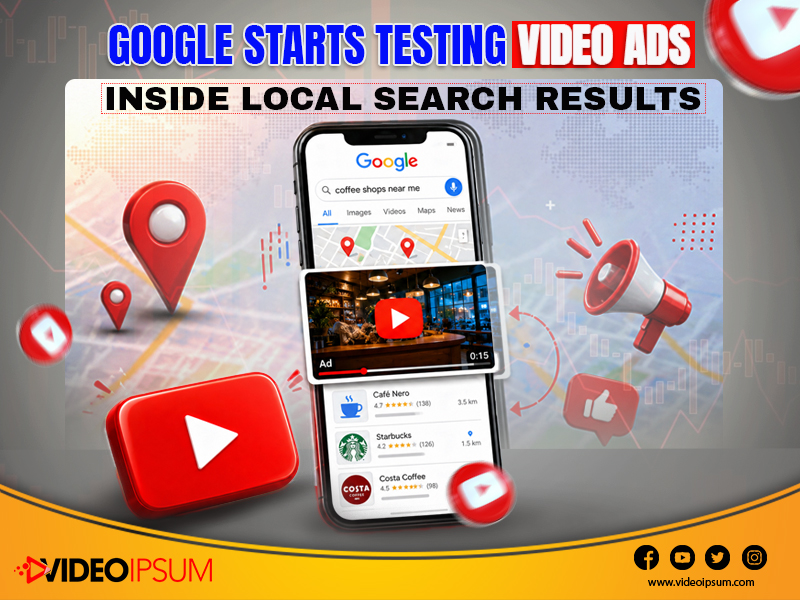
Google seems to be testing something new inside its local search results, and it could change how brands show up when people are ready to act. Video ads are now appearing within the local pack, adding a more visual layer to searches that already carry strong intent. This is a move toward making results more engaging, while giving advertisers a better shot at standing out in crowded spaces. As this experiment unfolds, it hints at a shift in which location-based searches lean more toward immersive formats that grab attention faster and hold it longer.
How did the news break?
The update started making rounds after a recent test revealed how Google is pushing video deeper into its ad experience. The platform appears to be blending immersive map-view videos directly into PPC ads linked to local search results, giving them a more dynamic edge. These placements show up within the local pack, the familiar map-based section that highlights nearby businesses when users search with clear intent. By adding motion and visuals into this space, this change hints at a more engaging way for listings to stand out while users explore options around them.
What’s the update?
Instead of the usual static listings or text-heavy ads, Google seems to be opening the door for something more dynamic inside local search. Some advertisers may now get the option to place video content directly into local results, giving their listings a stronger and more immediate visual presence right when users are ready to take action. It shifts the experience from simple scrolling to something that feels more active and engaging on screen, almost like browsing rather than searching. Early signs suggest this feature is connected to settings within Google Ads’ Location Manager. It may be turned on through a pre-optimized setting inside the shared library, which hints that the rollout is still in a testing phase. Not every advertiser may have full access yet, but the direction is already clear and intentional.
What really stands out is how this format blends paid placements with the familiar look of Google Maps. These ads begin to mirror immersive map-style experiences, making them feel less like traditional promotions and more like part of the browsing journey. It creates a space where discovery and advertising start to merge, giving brands a new way to capture attention while users explore nearby options.
Why is it important?
This update from Google could quietly reshape how brands show up in decisive local searches, especially at the exact moment users are ready to make a decision. By bringing video ads into the local pack, it adds a layer of depth that static listings have never really offered, making results feel more immediate and harder to ignore. Instead of relying on short text or still images, businesses now get a chance to show what they offer in motion, which naturally draws more attention and keeps users engaged for longer.
What makes this shift stand out is how it changes the way people interact with local results. A video can quickly highlight a location, walk someone through a product, or give a clearer sense of a service, all within a few seconds. That kind of clarity can influence decisions faster than traditional formats, especially when users are already searching with intent. It also brings a more polished and almost story-driven feel to a space that used to be more functional than visual.
At the same time, this move could push advertisers to rethink how they approach local campaigns. Investing in video creative may soon become less of an option and more of a necessity for those who want to stay competitive. As this format grows, brands that adapt early could find themselves standing out more easily, while others may need to catch up quickly to avoid being overlooked in an increasingly visual search space.
What’s the problem?
The feature from Google still seems to be in an early testing phase, and there is very little clarity around how widely it is available right now. It does not look like a full rollout yet, which means only a small group of advertisers may be seeing it in action. That also makes it harder to judge its real impact, especially when compared to traditional local ads that have been around for years and are easier to measure. For now, performance remains a bit of a question mark.
There is also a practical side that stands out. Video content adds a layer of complexity that not every advertiser is ready for. It takes more time to plan, shoot, and edit, and it often comes with higher costs. For smaller businesses, this could feel like a big jump from simple text or image-based ads. It also raises concerns around maintaining quality and consistency, especially when competing with brands that already have strong creative resources. As this develops, the gap between those who can invest in video and those who cannot may become more visible.
The bottom line
Google is starting to bring video into one of its most intent-driven spaces, local search, and the shift is quite deliberate. This is the area where users are already looking to take action, so adding video changes how that moment plays out. Instead of scanning through static listings, people may now come across moving visuals that hold attention longer and offer more context in a shorter span.
The move leans into a more immersive style of advertising, where brands can show rather than tell. A quick clip can highlight a location, present a product, or give a clearer sense of a service without needing too much explanation. It makes the experience feel more engaging, almost like browsing through content instead of searching through results. If this continues to expand, local search could start to look very different, with visuals taking a stronger role in how decisions are made.
If you have a YouTube account and want more
exposure for your videos, work with Videoipsum. The YouTube video
promotion company offers organic marketing campaigns within a budget, bringing
you authentic engagement.
Popular Posts

April 04,2022

February 04,2020
January 07,2026

January 10,2023